Unlocking Artificial Intelligence: A Beginner’s Guide to Agentic and Generative AI Tools

Introduction to Artificial Intelligence
Artificial Intelligence (AI) is the ability of machines or computer programs to do tasks that usually require human thinking. These tasks include understanding spoken or written language, recognizing objects or people in pictures, making decisions, and solving problems.
AI is already part of many things we use daily. For example:
- Voice assistants like Siri or Alexa
- Video or product recommendations on YouTube, Netflix, or Amazon
- Self-driving cars
- Chatbots that answer questions on websites
These tools use AI to help us save time, work faster, and make better choices.
AI Hierarchy: Understanding the Layers
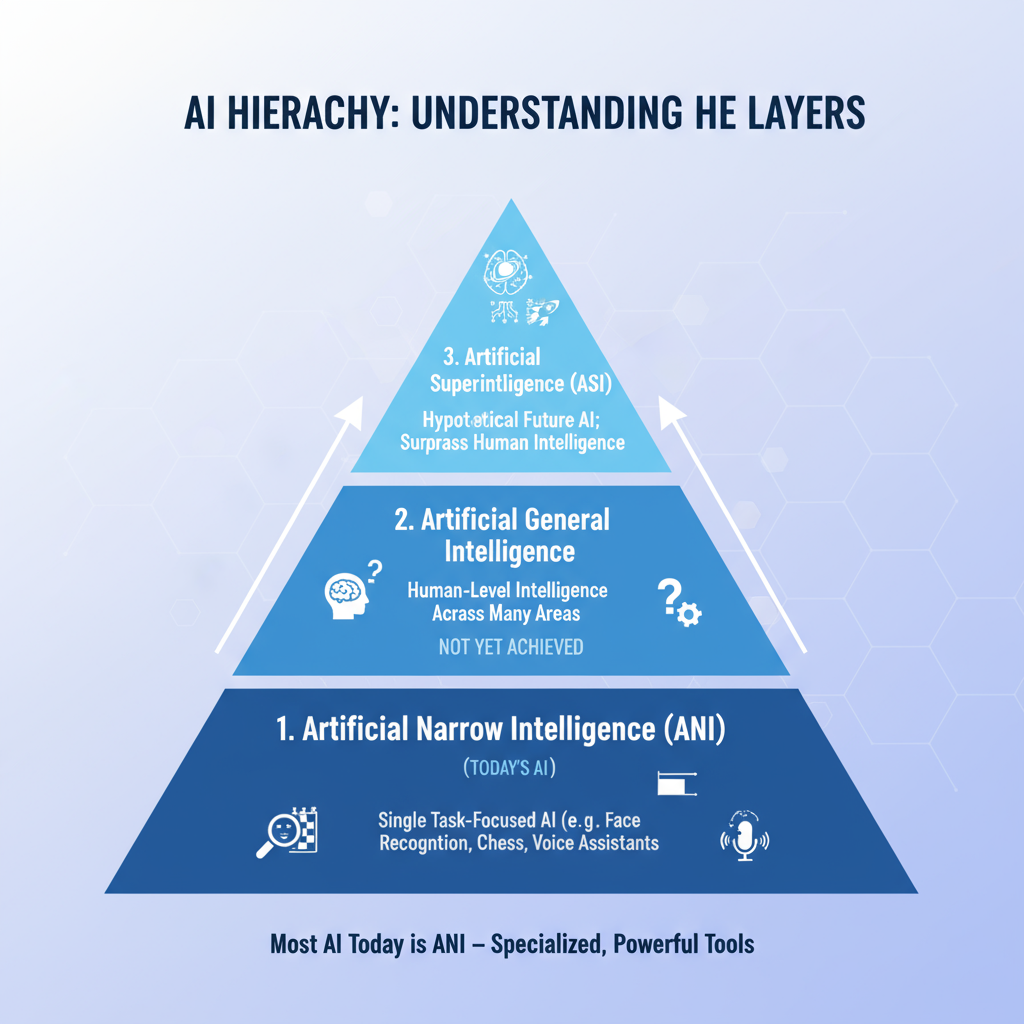
AI can be divided into different levels based on how smart or capable the system is. Understanding these layers helps you see where today’s technology stands and what may come in the future.
Artificial Narrow Intelligence (ANI)
This is the kind of AI we use the most today. ANI is designed to do one specific task. It cannot do anything outside that task.
Examples:
- A camera system that recognizes faces
- A program that plays chess
- A chatbot that answers support questions
These systems are fast and accurate in one area, but they cannot think outside that.
Artificial General Intelligence (AGI)
AGI is a type of AI that does not exist yet. It would be as smart as a human and able to understand and learn anything, just like people do.
AGI would be able to:
- Learn new subjects without being reprogrammed
- Solve new types of problems
- Adjust to different situations easily
Scientists are working toward building AGI, but it is still under development.
Artificial Superintelligence (ASI)
ASI is a possible future type of AI that would be smarter than all humans combined. It could:
- Make better decisions than humans
- Learn faster and think deeper
- Solve complex global problems
This type of AI has not been created and only exists in ideas and research. It also raises important questions about safety and ethics.
How AI Works: The Basics
AI works by learning from large amounts of data. You can think of it like teaching a student using examples. The more examples you give, the better the student becomes at solving similar problems.
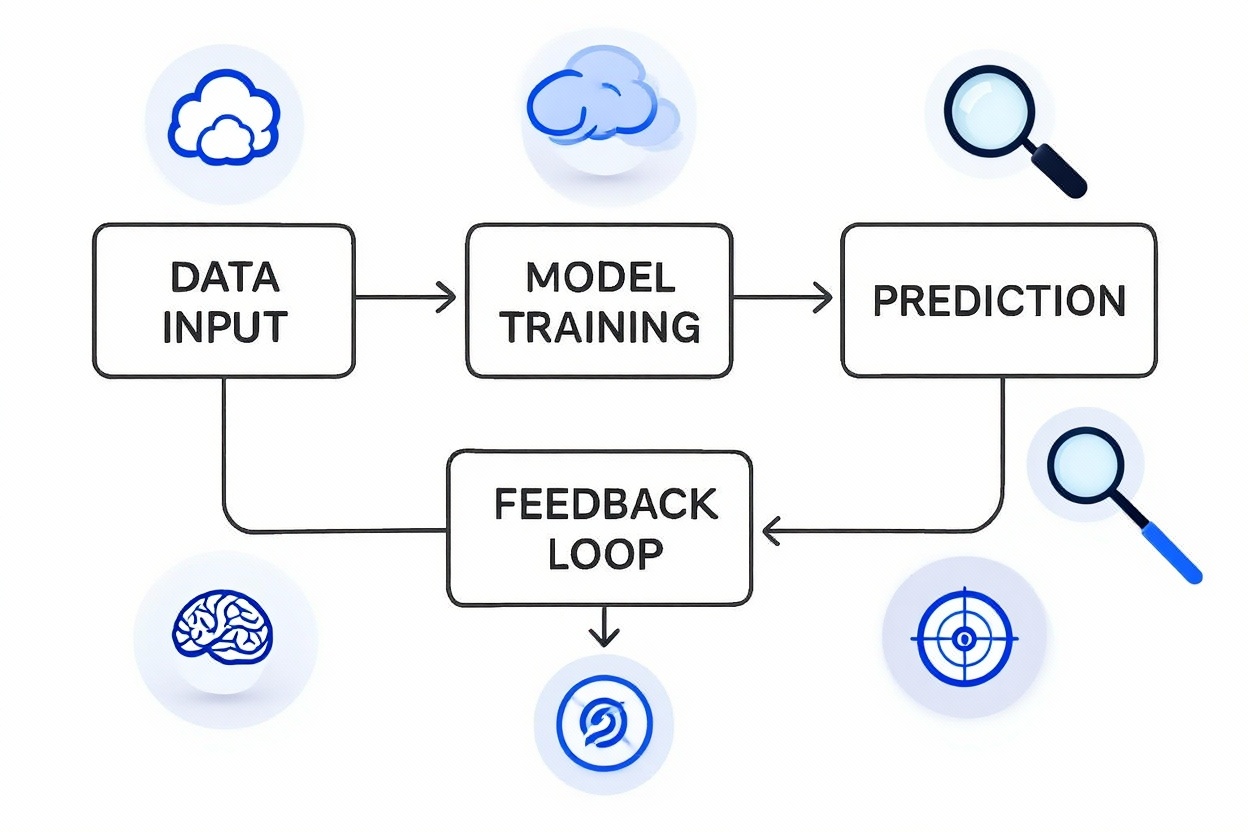
Here are the basic steps AI systems follow:
Data Collection: The first step is gathering data. This could be:
- Pictures of animals
- Spoken language recordings
- Text from books or websites
- Numbers from sensors or machines
The quality and amount of data are very important.
Processing: Once the data is collected, the AI software processes it. It looks for patterns or common features. For example, it might learn that cats usually have pointy ears and whiskers.
Model Training: Using the patterns it found, the AI creates a “model.” This model is like a rulebook that helps the AI make decisions in the future.
Prediction/Decision: When the AI sees new data, it uses the trained model to make a guess or decision. For example, if you show it a new animal photo, it tries to tell you if it is a cat or dog.
Feedback and Improvement: The AI checks if its guess was right. If not, it adjusts itself to improve. Over time, the system gets better the more it learns.
What Is Machine Learning?
Machine Learning (ML) is a way for computers to learn from data without being told every step. Instead of writing a program with fixed rules, you give the system many examples, and it figures out the rules on its own.
Types of ML:
-
Supervised Learning
The AI is given labeled data (for example, pictures of animals with their names). It learns by comparing its guesses with the correct answers. -
Unsupervised Learning
The AI is given data with no labels. It finds hidden patterns on its own. For example, it might group photos that look similar. -
Reinforcement Learning
The AI learns by trying actions and receiving feedback. Good actions earn rewards, and bad ones get penalties. This is used in games and robotics.
Machine Learning is used in:
- Speech-to-text apps
- Spam filters in email
- Music and movie recommendations
Main Types of AI
Here are some common types of AI you might hear about:
Narrow AI :This AI is designed to do just one job well, such as translating text or playing music based on your mood.
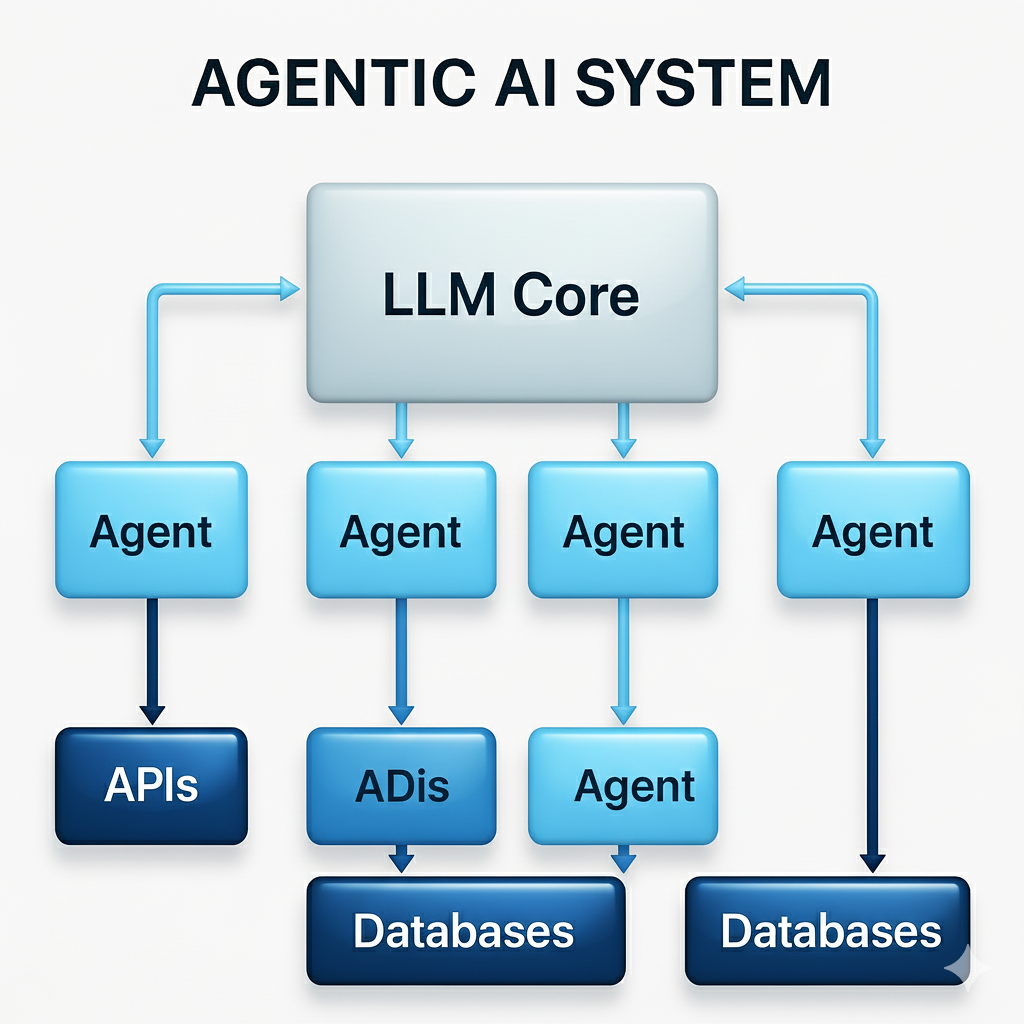
Agentic AI: This AI can plan and take action by itself. It does not just follow instructions—it can figure out how to reach a goal step by step.
Generative AI: This AI can create new content such as:
- Text
- Art
- Music
- Videos
- Code
Large Language Models (LLMs): These AI systems are trained on a huge amount of text. They can:
- Answer questions
- Write stories or emails
- Explain concepts
Retrieval-Augmented Generation (RAG): This improves AI responses by using real-time information. For example, if an AI cannot remember a date, it can search and include the latest facts in its answers.
LangChain: LangChain helps developers connect different AI tools together. It makes it easier to build apps that use AI to do multiple tasks at once.
What Is Agentic AI?
Agentic AI is special because it does not just wait for commands. It can:
- Think about the problem
- Break it into smaller steps
- Use the right tools to solve it
- Learn from its results
Think of Agentic AI as a helpful worker who can do the job from start to finish without needing to be told every single step.
Use Agentic AI for:
- Answering customer questions automatically
- Managing complicated software tasks
- Handling multiple steps in a business process
Understanding Generative AI
Generative AI learns from the data it is trained on and then creates something new from what it learned.
Uses of Generative AI:
- Writing articles, blogs, or scripts
- Designing posters, logos, or artwork
- Making music or short videos
- Writing or debugging computer code
Popular Models:
- GPT: Used for generating text
- Stable Diffusion: Used for creating realistic images
These tools are helpful for both creative professionals and students.
Key Tools Explained
Let’s look at some common tools used in AI development:
LLMs (Large Language Models): These are trained on books, articles, and websites. They understand and respond to human language.
Example: ChatGPT
RAG (Retrieval-Augmented Generation): This adds a search feature to AI. When the model does not know something, it looks it up and then answers.
LangChain: This tool lets developers combine different AI parts like chatbots, databases, and decision-making tools into one system. It’s like a bridge that connects everything.
Free AI Models and Tools for Developers
Many free AI tools are available for anyone who wants to build their own projects. Here are some good ones:
For Text Generation:
- Llama 3
- GPT-NeoX
- Falcon
- Mistral
For Image Creation:
- Stable Diffusion
- Adobe Firefly
- Freepik AI tools
For Video Generation:
- vivago.ai
- Freepik AI video generator
Agentic AI Frameworks:
- LangChain
- Botpress
- RASA
- CrewAI
AI Search Databases:
- Pinecone
- Chroma
- pgai
These tools are beginner-friendly and can be used to make real AI apps.
How to Use Free AI Models in Your Projects
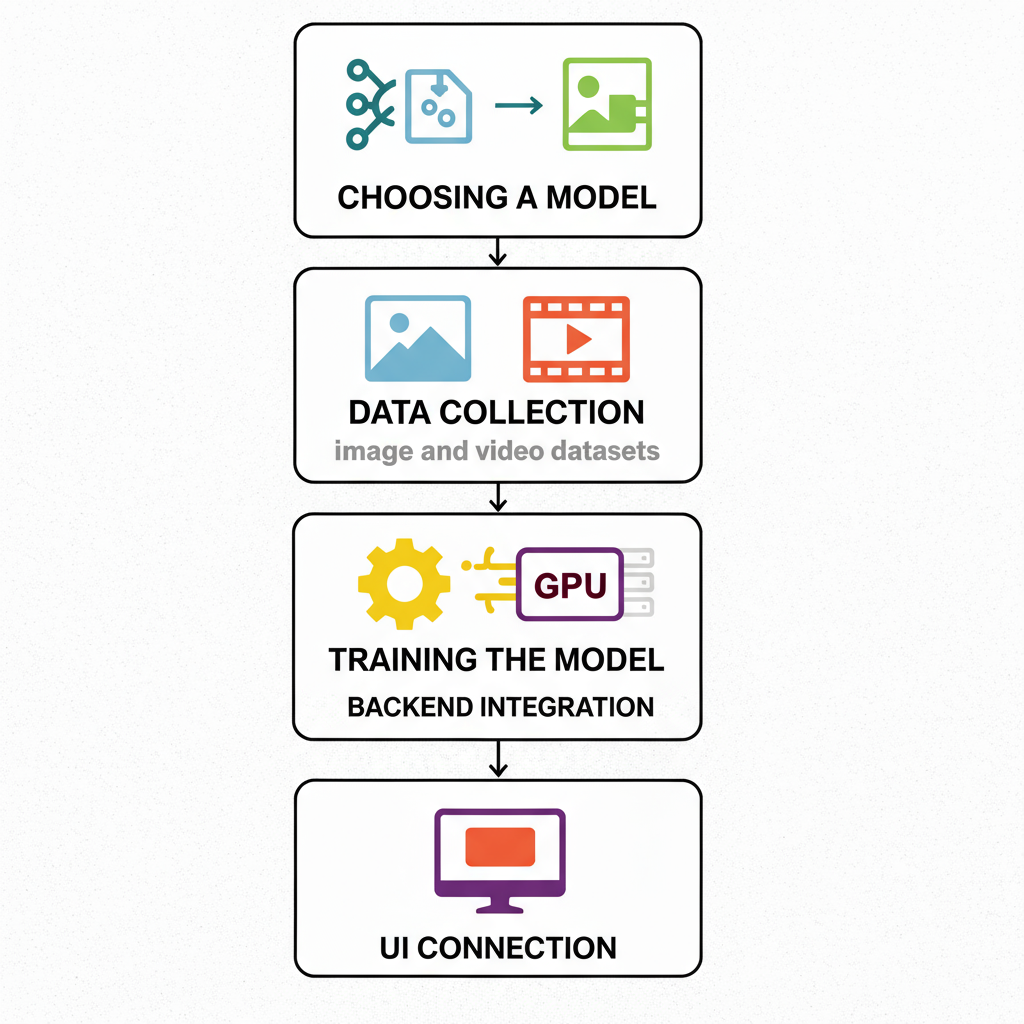
Here’s a step-by-step guide for building your own AI tool:
-
Choose the Right Model: Decide whether you need AI for text, images, or video.
-
Install the Tools: Use programming languages like Python or JavaScript to install the AI tools.
-
Prepare the Data: Clean your data and organize it well. This helps the AI learn better.
-
Connect APIs: Use APIs to connect your app to the AI services.
-
Use a Framework: Tools like LangChain help you link different steps together.
-
Fine-Tune the Model (Optional): You can train the model with your own data for better results.
-
Build the Interface: Create a simple screen where users can interact with your AI tool.
This process helps you build tools like chatbots, image creators, and smart search systems.
Important Notes for Developers
- Always respect users’ privacy and protect their data.
- Write clear documentation so others can understand and use your tool.
- Double-check your AI’s output for accuracy and fairness.
- Start with free, open-source tools before buying premium services.
- Keep your tools updated to stay safe and efficient.
Final Thoughts
AI is growing fast and becoming part of everything—from education to healthcare, from business to art. Whether you’re a student, developer, or curious learner, there are tools available for you to explore and create.
You do not need to know everything at once. Just start with one project, learn step by step, and keep going. With time and practice, you can build useful and exciting AI tools that make a real difference.


Recent Comments